Monday, 25 October 2021

From December 1, TV viewers may have to pay 50% more

TV Channels price

 TV viewers may have to pay up to 50% more for the same number of TV channels starting December 1 after top four broadcasters – Star & Disney India, Zee Entertainment Enterprises (ZEE), Sony Pictures Networks India (SPN) and Viacom18 – updated their channel pricing in compliance with the amended tariff order (NTO 2.0).

The Telecom Regulatory Authority of India (TRAI) was of the view that NTO 2.0 would allow viewers more choice and freedom to select and pay only for the channels that they want to watch.

However, the broadcasters have kept all the popular channels out of bouquets and these channels have been priced between Rs 15-25 per month.

Under NTO 2.0, TRAI had capped the price of channels at Rs 12, if part of any bouquet. The broadcasters were allowed to price their channels higher if they are kept out of the bouquets.

So, in order to watch the more popular channels like Star Plus, Colors, Zee TV, Sony, and some regional general entertainment channels, viewers will have to select these channels on an à la carte basis, which will increase their monthly TV bill by almost 35-50%, as per market watchers.

Source from and read more : economictimes.com, for all positive news and handpicked highly recommended shopping, must visit : Clikinfo.com


Tuesday, 4 February 2020

Why my all deposits aren't safe in bank?

   The Centre's proposed Financial Resolution and Deposit Insurance Bill (FRDI), which is aimed at plugging bankruptcies in the financial services sector, includes a special provision which by definition allows the affected banks to use depositors' money to absorb some of the losses.   The provision, which finds its origins in the European banking crisis of 2008-09, has raised a red flag after which the Centre hinted at reviewing the proposal. The proposal is part of the FRDI, which has now been referred to the Parliamentary committee that plans to establish a resolution corporation to monitor financial firms, anticipate the risk of their failure, take corrective action, and work out a resolution plan.   The recent incident of restriction by the Reserve Bank of India (RBI) on the withdrawal of money kept with a failing bank has raised several questions for the common man. “Is my money safe with banks?, “Why is my money blocked?, “Is keeping money in bank in savings / deposit account akin to lending to a bank? “Why is my deposit amount not fully covered by insurance?”, are some of the queries that keep rising.Banks, including regional rural banks, local area banks, foreign banks with branches in India, and cooperative banks, are mandated to take deposit insurance cover with the Deposit Insurance and Credit Guarantee Corporation (DICGC) constituted by a Central Act and governed by the RBI. The DICGC has been in existence since 1978 to serve as deposit insurance and credit guarantee for banks in India.


       A Guide to the deposit insurance and credit guarantee corporation (DICGC)
Q1 Which banks are insured by the DICGC?
Commercial Banks: All commercial banks including branches of foreign banks functioning in India, local area banks and regional rural banks are insured by the DICGC.

Cooperative Banks: All State, Central and Primary cooperative banks, also called urban cooperative banks, functioning in States / Union Territories which have amended the local Cooperative Societies Act empowering the Reserve Bank of India (RBI) to order the Registrar of Cooperative Societies of the State / Union Territory to wind up a cooperative bank or to supersede its committee of management and requiring the Registrar not to take any action regarding winding up, amalgamation or reconstruction of a co-operative bank without prior sanction in writing from the Reserve Bank are covered under the Deposit Insurance System. At present all co-operative banks other than those from the States of Meghalaya, and the Union Territories of Chandigarh, Lakshadweep and Dadra and Nagar Haveli are covered under the deposit insurance system of DICGC.

Primary cooperative societies are not insured by the DICGC.
Q 2 What does the DICGC insure?
In the event of a bank failure, DICGC protects bank deposits that are payable in India.
The DICGC insures all deposits such as savings, fixed, current, recurring, etc. except the following types of deposits.
(i)  Deposits of foreign Governments;
(ii) Deposits of Central/State Governments;
(iii)Inter-bank deposits;
(iv) Deposits of the State Land Development Banks with the State co-operative bank;
(v) Any amount due on account of any deposit received outside India
(vi) Any amount, which has been specifically exempted by the corporation with the previous approval of Reserve Bank of India.
Q 3 What is the maximum deposit amount insured by the DICGC?
Each depositor in a bank is insured upto a maximum of Rs.1,00,000 (Rupees One Lakh) for both principal and interest amount held by him in the same capacity and same right as on the date of liquidation/cancellation of bank's licence or the date on which the scheme of amalgamation/merger/reconstruction comes into force.
Q 4 How will I know whether my bank is insured by the DICGC or not?
The DICGC while registering the banks as insured banks furnishes them with printed leaflets for display giving information relating to the protection afforded by the Corporation to the depositors of the insured banks. In case of doubt, depositor should make specific enquiry from the branch official in this regard.
Q 5 How is the premium paid by banks calculated?
All registered insured banks are liable to pay to the DICGC deposit insurance premium at the rate of 10 paise per annum for every deposit of Rs 100 (i.e 0.10 percent p.a) for the half year ending March and September on the total deposits of the bank as on the preceding half year. The premium paid by the insured banks are computed on the basis of their assessable deposits.
Q 6 What is the ceiling on amount of Insured deposits kept by one person in different branches of a bank?
The deposits kept in different branches of a bank are aggregated for the purpose of insurance cover and a maximum amount upto Rupees one lakh is paid.

More to Know Q&A : "Click here"

  Banks pay insurance premium on the total value of the deposits held by the bank. However, the insurance cover is restricted to Rs 1 lakh value of the deposit only. Why should there be a restriction on the deposit insurance claims as it appears that the full amount of deposits are insured? Further, for illustrative purposes only, when compared with life insurance cover, it appears that the premium paid for a term life policy of insurance cover of Rs 1 crore is approximately Rs 5,880 while the deposit insurance premium paid by the bank to the DICGC for a deposit of Rs 1 crore is Rs 10,000.
  In the past two decades, commercial banks have paid 13 times the premium charged to cooperative banks, data from the DICGC shows. In this period, no commercial bank has been allowed to wind up operations, while the cumulative claims settled for cooperative banks have risen from Rs. 72 crores to Rs. 4,822 crores. The burden of bad behavior on the part of cooperative banks is being borne by the good banks, the state-backed banks, and ultimately by the taxpayer.
  Now, The Govt. is rethinking of increase the insurance cover of ₹1 lakh on deposits. India is one of the few large economies around the world that has a uniform insurance premium for deposits across banks. At a deposit insurance cover of ₹1 lakh, India’s cover also appears relatively low.
As per report from Livemint "Visit Here"
(Source:The Economics Times, Financial Express and Livemint)

 There are many banks in our country from public to private and some are in process to get banking licence. So think before deposit and follow RBI's guidelines.  It is still in everybody mind, "Who is responsible for bank failure and why I pay instead of punish? These are my hard earn money and on that my financial life or my livelihood depends. Also Govt wants cashless India.Then how can I trust banks? On that part, I get only ₹1 Lakh over my deposits more than this. So at least Govt. should increase the insured payable amount from ₹1 lakh to ₹2 lakh." The conclusion part is depositors money may safe in financially strong banks with managing NPA also where govt is involved.

2020-2021 Budget: Govt announced increasing of insured amount from 1 Lakh to 5 Lakh. It is great news for all bank customer.

Tuesday, 28 January 2020

LIC's 19 policy is going to close on 31st Jan 2020


 The Life Insurance Corporation of India is closing 19 of its insurance plans soon, in which popular plans like LIC New Jeevan Anand, Jeevan Umang, Jeevan Lakshya are also included among others. As per, following the guidelines of the Insurance Regulatory and Development Authority of India (IRDAI), these plans will be launched afresh on 1 February.

Discontinuing LIC Policy Name 

Non-linked individual policy

  1. Plan No. 814 : New Endowment plan
  2. Plan No. 815 : New Jeevan Anand
  3. Plan No. 817 : Singal Premium Endowment plan
  4. Plan No. 820 : New Money back yojna
  5. Plan No. 822 : Anmol Jeevan2
  6. Plan No. 830 : Limited Premium Endowment plan
  7. Plan No. 832 : New Children Money back plan
  8. Plan No. 833 : Jeevan Lakshya
  9. Plan No. 834 : Jeevan Tarun
  10. Plan No. 836 : Jeevan Labh
  11. Plan No. 839 : Bhagya Lalxmi
  12. Plan No. 840 : New Jeevan Mangal
  13. Plan No. 843 : Aadhar Stambh
  14. Plan No. 844 : Aadhar Shilp
  15. Plan No. 845 : Jeevan Umang
  16. Plan No. 847 : Jeevan Shiromani
  17. Plan No. 848 : Bima Shree
  18. Plan No. 851 :  Micro Bachat
Unit Linked individual policy
  1. Plan No. 835 : New Endowment Plus

 Due to the closure of LIC plans, it is expected that not only the returns on new schemes will be reduced, but their premiums also increase. For this reason, LIC agents are advising customers to invest in these schemes before 31 January.
Courtesy : Patrika

Get more info must visit : www.Clikinfo.com

Friday, 10 January 2020

Aadhar PAN linking mandatory by end of March 31, 2020.

Section 139 AA (2) of the Income Tax Act says that every person having PAN as on July 1, 2017, and is eligible to obtain Aadhaar, must intimate his Aadhaar number to tax authorities. Aadhaar is issued by the Unique Identification Authority of India (UIDAI) to a resident of India and PAN is a 10-digit alphanumeric number allotted by the I-T department to a person, firm or entity. The CBDT, that frames policy for the tax department, said a notification numbered 107 has been issued in this context
.
A registered user on income tax e-filing website:
In case you are already filing tax returns, there is a possibility that your PAN is already linked with Aadhaar only if you have mentioned it while filing an ITR in the previous assessment years.
You can check if your Aadhaar and PAN are linked on www.incometaxindiaefiling.gov.in
All you need to do this is that login to the website entering PAN, password and your date of birth. After logging in, click on 'profile settings' and select'link Aadhaar'. Once you follow the steps, you will receive a confirmation message that your PAN and Aadhaar are now linked.
If you are a non-registered user
Another way, without registering on the website, you can use the hyperlink provided on the homepage of the website.

https://www1.incometaxindiaefiling.gov.in/e-FilingGS/Services/LinkAadhaarHome.html
Click on Link Aadhaar on the e-filing website and a new form will appear. You are required to enter your PAN and Aadhaar details. You will receive a confirmation message once you have submitted all the details.
Other methods include;
Send an SMS to PAN service providers
You can use this method if you are unable to link through the website. Earlier, Central Board of Direct Taxes (CBDT) in its notification dated June 29, 2017, had provided other ways to link the both.
You can send an SMS to the PAN service provider (NSDL e-Governance Infrastructure Limited or UTI Infrastructure Technology and Services Limited) on 567678 or 56161.
This is the format that has to be used;
UIDPAN<SPACE><12 digit Aadhaar><SPACE><10 digit PAN>
Manual linking
Here, you have to visit a servicecentre of PAN service provider and fill a 'Annexure-I' form and submit a copy of PAN card and Aadhaar card.
While online service are free of cost, if you opt for manual linking, you may have to shell out some money. The fee depends on whether, during the process, correction is made to the PAN or Aadhaar details. In order to make corrections to the PAN details, a fee of Rs 110 is levied while to make any changes in the Aadhaar details, Rs 25 will be levied.

Source: Yahoo.com

Thursday, 2 January 2020

UAN NO. Activation

   Many working person know they have PF deduction but does not know "How to generate and activate UAN and how to get PF passbook?" The person who has a PF account is allotted with a unique 12-digit account number by the Employee Provident Fund Organization (EPFO). Universal Account Number (UAN) allows you to access, check and withdraw from the Provident Fund account. But withdrawal is only for Aadhar verified A/C. Now, go below mention process of how to activate UAN.


  • Next, enter the PIN and enable the declaration for the applicant to submit the form.

  • Now you will need to create the password. The password should be Alphanumeric, with 1 capital letter, 1 special character and should be of 8-25 character long.
  • Next step is mobile number authentication, you will get the authentication PIN to your registered mobile number.
  • Now enter the Captcha and submit the application form.
  • If the mobile number is already registered, you can retrieve the password if you have forgotten the password.
  • Then, select any one of the above options, enter your name, Date of Birth(DOB), mobile number and email ID.
  • PAN Card
  • Aadhar Card
  • EPF Member ID
  • Universal Account Number
  • Next, fill the login form and now enter the 4 required details.
  • The above process is for the complete registration and activation of the UAN member portal.
  • To access the UAN portal, you have to give UAN as log in ID and use the given password.
  • After the login, you will see the following dashboard.
  The UAN Member Portal allows you to perform a number of operations at one go and brings all your information under the shed of your UAN number. Thus, it simplifies PF usage and gathers all necessary information for you to access easily at your own comfort.

Wednesday, 9 October 2019

Reliance Jio will now charge 6 paise per minute as IUC charge

Jio has announced that it will charge customers for levying the IUC(Interconnect Usage Charge) charge on all outgoing calls to other networks for the time being from 10th of October 2019. Justifying the new charges, Jio said it has paid nearly Rs 13,500 crore as IUC charges to the rivals such as Bharti Airte and Vodafone Idea. in the last three years. The company said it has decided to charge customers to recover the IUC losses. Jio, however, said these charges are not applicable on calls made by Jio users to other Jio phones and to landline phones and calls made using WhatsApp, FaceTime and other such platforms. Incoming calls from all networks will continue to be free.

Telecom regulator TRAI in 2017 had slashed the interconnect usage charge (IUC) to 6 paise per minute from 14 paise and had said this regime will end by January 2020. But it has now floated a consultation paper to review whether the regime timeline needs to be extended.


Jio has come up with a few IUC plans that customers can purchase in order to make calls to other networks.Jio will provide additional data entitlement of equivalent value based on IUC top-up voucher consumption. This will ensure no increase in tariff for customers.
New Jio IUC plans
Jio is offering four new IUC plans with extra data benefits. Here are all the plans listed with the benefits:
--Rs 10 plan will offer 124 minutes of IUC minutes to non-Jio numbers and 1GB data.
--Rs 20 plan will offer 249 minutes of IUC minutes to non-Jio numbers and 2GB data.
--Rs 50 plan will offer 656 minutes of IUC minutes to non-Jio numbers and 5GB data.
--Rs 100 plan will offer 1,362 minutes of IUC minutes to non-Jio numbers and 10GB data.

Wednesday, 20 February 2019

Emergency helpline "112" number launched in India


A single emergency helpline number "112" was launched in 16 states and Union Territories. The emergency services were earlier launched in Himachal Pradesh and Nagaland. 112 would provide immediate assistance to services like police (100), fire (101), health (108), women safety (1090) and child protection. The emergency number will gradually be extended to other states as well. The single number for emergency services is similar to ''911'' in the United States.
Home Minister Rajnath Singh, while launching the emergency number, said, the central government is committed to the safety of citizens, particularly women, for whom laws were changed to ensure the guilty is punished in a time-bound manner.

"The helpline number ''112'' will be activated across the country by next year and anyone in distress can reach the helpline by pressing a single key of phones which will be pre-programmed," Rajnath Singh said.

States where single emergency number 112 has been launched:
The 16 states and Union Territories are Andhra Pradesh, Uttarakhand, Punjab, Kerala, Madhya Pradesh, Rajasthan, Uttar Pradesh, Telangana, Tamil Nadu, Gujarat, Puducherry, Lakshadweep, Andaman, Dadar and Nagar Haveli, Daman and Diu, Jammu and Kashmir.

Panic call feature on 112 emergency helpline:
There is another unique feature of this helpline. On smart phones, you can press power button three times quickly to activate panic call to Emergency Response Centre (ERC). On normal phones, long press ''5 or ''9'' to activate panic call.

Emergency complaints online:
The emergency services can also be accessed online by logging on to Emergency Response Support System (ERSS) website. On the ERSS website, you can either send an emergency email or send SOS alert to Emergency Report Centre (ERC).

People can also log onto the ERSS website for the respective state and send an emergency email or SOS alert to state ERC. They can use ''112'' India mobile app, which is available free on Google Play Store and Apple Store.

"112 India" mobile app's "SHOUT" feature alerts registered volunteers close to the victim for immediate assistance.

"112 India" emergency helpline mobile app:

A "112 India" mobile app by the Ministry of Home Affairs was also be launched on Google Playstore and Apple store. For women and children, "112 India" mobile app provides a special ''SHOUT'' feature which alerts registered volunteers close to the victim for immediate assistance.

Launch of Investigation Tracking System for Sexual Offences (ITSSO)

Apart from launching the Emergency Response Support System, the home minister also kicked off, the Investigation Tracking System for Sexual Offences and the safe city implementation monitoring portal for law enforcement agencies in the country.

The system is an online module available to law enforcement agencies at all levels - national, state, district and police station - and allows the state to undertake real-time monitoring and management for completion of investigation in rape cases in two months.

It leverages the existing Crime and Criminal Tracking Network and Systems (CCTNS) data base, which covers nearly 15,000 police stations in the country.

The Investigation Tracking System for Sexual Offences (ITSSO) would greatly strengthen the ability of states for analytics and prognosis for timely investigation and prosecution in rape cases.

The home minister said safe city implementation monitoring portal will instill a sense of security in women in metro cities.

"The government has identified eight cities for implementation of safe city projects in first phase at a cost of Rs. 2,919 crore. The cities are Ahmedabad, Bengaluru, Chennai, Delhi, Hyderabad, Kolkata, Lucknow and Mumbai. The projects are funded under Nirbhaya Fund scheme," he said.

FOR MORE DETAIL VISIT: https://ners.in

Thursday, 28 June 2018

Fish Adulteration in India


Major raids have been carried out in Kerala and Nagaland, with nearly 15,600 kilograms and Rs 10 lakh worth of formalin-laced fish being seized from the two states respectively. Formalin is the chemical used to preserve bodies and prevent its decay in mortuaries. The widespread use of the deadly chemical nowadays in the preservation of fish, fruit, and other food items is posing a great threat to public health.

Now, What is Formalin?
Formalin is a colourless but a strong-odour chemical, which is a mixture of formaldehyde, methanol and water. which is classified as a carcinogenic to humans. It contains 37 to 40 percent formaldehyde, and is used mostly in mortuaries and labs.
It is commonly used in industry for manufacture of plastic, paper or wood, to cleaning floor/ships, in the production of fertilizer and cosmetics, to preventing corrosion for oil wells, among others.
Formalin has also been used to preserve fresh foods to prevent spoilage and extend shelf life, even though its consumption is harmful to human beings..
Some of the short-term effects of formalin, according to the US National Cancer Institute, are burning sensations in the eyes, nose, and throat, coughing, and nausea, among others. These symptoms are caused when the formaldehyde present in the air exceeds 0.1 ppm.
Continuous ingestion of formalin can lead to cancer, as it releases toxins into the body.
Where is formalin used?
The chemical and known human carcinogen can be found in many unexpected places, like wood products such as cabinets and flooring, hair straightening or curling treatments, fertilisers, cigarette smoke, and some plastic and paper products, according to a report by Fox News.
How can it be detected?
Central Institute of Fisheries Technology (CIFT), under the Ministry of Agriculture, has developed a rapid detection kit that can be used conveniently by individual buyers to determine formalin and ammonia contents in fish. There are separate kits for formalin and ammonia contamination detection, and they comprise strips of paper and a small bottle of chemical solution that works as a reagent, reported The Hindu.
To detect contamination, one has to rub the strip over the fish and later apply a drop of the solution on the strip. The result will be known in two minutes. The kit comes with a colour code indicating the level of contamination.

Courtesy Yahoo News dated 27/6/18

Monday, 9 March 2015

Plastic Crystal in Your Sugar


sugar adulteration
Everyone know that Sugar is also not free from adulteration. It mix with chalk powder, urea etc. But I was shocked when I get to know about Sugar Adulteration with "the material".
What is new material which can be use to mix with sugar? It is a fine plastic crystal, which can't see with naked eyes. However, if sugar with crystals is added to cold water, it will not dissolve and settle at the surface of the container. However, if this test is done with milk or tea, the result may not be conclusive as even adulterated sugar gets dissolved. The possible use is in commercial joints like  resto, hotel, tea center, etc. Where everything serve hot or use the sugar hot purpose.

A report was published in TOI on 12 JAN 2015
Adulterated sugar samples seized

How to detect:
Just dissolve the sugar in cold water and find plastic crystal on surface of water.

Saturday, 7 March 2015

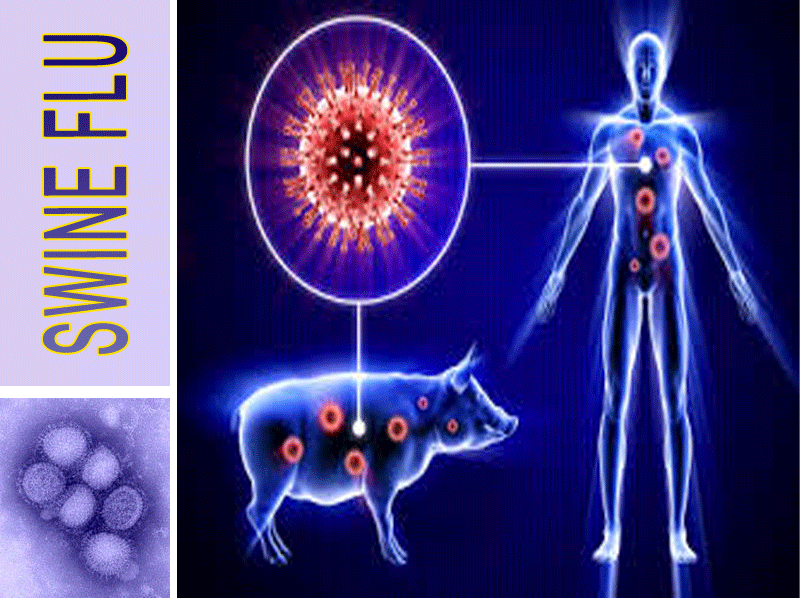
SWINE FLU, A cureable viral desease


 Swine influenza, also called pig influenza, swine flu, hog flu and pig flu, is an infection caused by any one of several types of swine influenza viruses. A known as H1N1, H1N2, H2N1, H3N1, H3N2, and H2N3.
In August 2010, the World Health Organization declared the swine flu pandemic officially over.
Cases of swine flu have been reported in India 2015, with Bollywood actress Sonam Kapoor testing positive. This has cited fears that the pandemic may have returned.

Transmission between pigs

Influenza is quite common in pigs.The main route of transmission is through direct contact between infected and uninfected animals.These close contacts are particularly common during animal transport.

Transmission to humans

People whose jobs involve handling poultry and swine be the focus of increased public health surveillance. Other professions at particular risk of infection are veterinarians and meat processing workers, although the risk of infection for both of these groups is lower than that of farm workers

Courtesy: Wikipedia

Causes of Swine Flu

Swine flu is contagious, and it spreads in the same way as the seasonal flu. When people who have it cough or sneeze, they spray tiny drops of the virus into the air. If you come in contact with these drops or touch a surface (such as a doorknob or sink) that an infected person has recently touched, you can catch H1N1 swine flu.
Despite the name, you can't catch swine flu from eating bacon, ham, or any other pork product.

Swine Flu Symptoms

People who have swine flu can be contagious one day before they have any symptoms, and as many as 7 days after they get sick. Kids can be contagious for as long as 10 days.

Most symptoms are the same as seasonal flu. They can include:

Swine Flu Symptoms
  • cough
  • fever
  • sore throat
  • stuffy or runny nose
  • body aches
  • headache
  • chills
  • fatigue

Like seasonal flu, swine flu can lead to more serious complications, including pneumonia and respiratory failure. And it can make conditions like diabetes or asthma worse. If you have symptoms like shortness of breath, severe vomiting, abdominal pain, dizziness, or confusion, call your doctor or 911 right away.

Tests for Swine Flu

It's hard to tell whether you have swine flu or seasonal flu, because most symptoms are the same. People with swine flu may be more likely to feel nauseous and throw up than people who have seasonal flu. But a lab test is the only way to know for sure. Even a rapid flu test you can get in your doctor's office won't tell you for sure.
To test for swine flu, your doctor takes a sample from your nose or throat. You may not need to be tested. The CDC says the people who need to be tested are those in the hospital or those at high risk for getting life-threatening problems from the flu, such as:

  • Children under 5 years old
  • People 65 or older
  • Children and teens (under age 18) who are getting long-term aspirin therapy, and who might be at risk for Reye's syndrome after being infected with swine flu. Reye's syndrome is a life-threatening illness linked to aspirin use in children.
  • Pregnant women
  • Adults and children who have chronic lung, heart, liver, blood, nervous system, neuromuscular, or metabolic problems
  • Adults and children who have suppressed immune systems (including those who take medications to suppress their immune systems or who have HIV)
  • People in nursing homes and other long-term care facilities

Swine Flu Treatment

Some of the same antiviral drugs that are used to treat seasonal flu also work against H1N1 swine flu. Oseltamivir (Tamiflu) and zanamivir (Relenza) seem to work best, although some kinds of swine flu are resistant to Tamiflu.

These drugs can help you get over swine flu faster. They can also help keep it from being too severe. They work best when taken within 48 hours of the first flu symptoms, but they can help when taken later.

Antibiotics won't help, because flu is caused by a virus, not bacteria.

Over-the-counter pain remedies and cold and flu medications can help relieve aches, pains, and fever. Don't give aspirin to children under age 18 because of the risk for Reye’s syndrome. Check to make sure that over-the-counter cold medications do not have aspirin before giving them to children.

Vaccine for Swine Flu

 The same flu vaccine that protects against seasonal flu also protects against the H1N1 swine flu strain. You can get it as a shot or as a nasal spray.
Besides a flu shot, there are other things you can do to stay healthy:

Wash your hands throughout the day with soap and water. Sing the "Happy Birthday" song twice to make sure you've washed long enough. Or use an alcohol-based hand sanitizer.
Don't touch your eyes, nose, or mouth.
Avoid people who are sick.

Courtesy: WebMD

PROLIFERATION
In order to prevent proliferation, aggravation of symptoms and development of secondery infections, some very simple steps can be practiced.

  1. Frequent hand washing. Alcohol-based gel or foam hand sanitizers work well to destroy viruses and bacteria.
  2. Disinfecting household surfaces, which can be done effectively with a diluted chlorine bleach solution.
  3. "Hands-off-the-face" approach.
  4. Gargle twice a day with warm salt water(can also use Listerine)
  5. Clean your nostrils at least once every day with warm salt water.
  6. Boost your natural immunity with foods that are in Vitamin C.
  7. Drink as much of warm liquids as you can. 
HOME REMEDY
1. Boil approximately 200ml of potable water, till it remains half and mix the following herbs in it.
Juice of 10 to 15 fresh leaves of Tulasi,(Basil),
5 ml of fresh ginger root juice,
half spoon powder of cloves,
half spoon powder of cinnamon bark,
half spoon powder of peppermint leaves,
half spoon powder of cardamom,
half spoon of turmeric powder,
half spoon of rock salt
mix all these properly, add one spoon of honey when the tea is luke warm and have it twice or thrice a day

2. Homeopathic Medicine Influenzinum 200(Dr. Reckeweg& Co.)

3. 5 Gms of each Desi Kamphor and small Elaichi make it powder and put it clean cotton cloth. Every 1 or 2 hour smell it. The aroma of Kamphor and Elaichi has very effective disinfectant properties.


 Rains facilitate virus activity. A cold and humid climate only increases the virus. But After Holi the weather in India is becoming hotter and so the survival of virus is going less day by day.

Tuesday, 26 February 2013

Do you know,how your phone deactivate by your mobile service provider?


TRAI VS MOBILE SERVICE PROVIDER


Telecom Service Providers (TSPs) currently prescribe a condition of deactivation if the mobile connections remain inactive for some period of time. 
On 21st February, 2013:Telecom Regulatory Authority of India(TRAI) has released a Regulation on ‘Deactivation of Cellular Mobile Telephone Connections due to Non-usage’.At present, there is lack of transparency in carrying out such disconnections. Consumers are also not adequately informed regarding the terms and conditions of such disconnections. In the event of deactivation,the balance amount in the account of the consumer gets forfeited. In such conditions, deactivation has been causing inconvenience to consumers.


The following regulatory guidelines for deactivating mobile no:-
  1.  The mobile connections of prepaid consumers shall not be deactivated  for any period of non-usage less than 90 days;
  2.  For the purpose of usage, a voice call/ video call (incoming or outgoing) or an outgoing SMS or a data usage or usage of Value Added Services, or payment of rental (in case of post paid connection) etc. shall definitely fall in the scope of activity, the service provider may prescribe any other activity as well;
  3. There shall be no deactivation if the balance in prepaid consumer account is Rs.20/- or more;
  4. An ‘Automatic Number Retention Scheme’ shall be implemented for prepaid consumers on payment of reasonable charges;
  5.  A consumer whose connection is deactivated shall be given a grace period of 15 days within which he can reactivate the same number;
  6.  Consumers shall be transparently communicated the terms and conditions of deactivation of SIMs due to non-usage.
Ref:  TRAI released a Regulation on ‘Deactivation of Cellular Mobile Telephone Connections due to Non-usage’.

to know more about TRAI Guideline visit: "http://www.trai.gov.in" 


Sunday, 4 November 2012

Dengue Fever: symptoms, precautions and treatment


Dengue:

Dengue is an infectious tropical disease caused by the dengue virus and transmitted by the bite of an Aedes mosquito.The virus has four different types; infection with one type usually gives lifelong immunity to that type, but only short-term immunity to the others. Subsequent infection with a different type increases the risk of severe complications. As there is no commercially available vaccine.

Symptoms:

  • UNABATED FEVER is the most prominent symptom (up to 105oF)
  • Fever may also be accompanied with SHIVERING / BODY ACHE / ACHE IN THE EYES. 
  • Severe joint and muscular pain
  • Nausea and vomiting
  • Retro-orbital (behind the eye) pain
  • Appearance of RASHES ON THE BODY is a definitive symptom. The rash may appear over most of the body 3 to 4 days after the fever begins, and then subsides after 1 to 2 days. You may get a second rash a few days later.
However it must be noted that these symptoms MAY OR MAYNOT MANIFEST TILL VERY LATE. The MOST RELIABLE symptom is A FALL IN THE PLATELET COUNT.

CAUSE & EFFECT OF THE DISEASE:

The fever is caused by a mosquito bite. The Mosquito acts as a carrier of the Dengue Virus.The virus's main affect is on the PLATELET production. Normally the platelets in our body lasts for about 4 days and the body replenishes them when required. This virus DESTROYS THE BODY's CAPACITY TO PRODUCE NEW PLATELET's (during the period it is effective). The PLATELET count for a normal person varies from 1.5 Lakh - 2.5 Lakh per unit volume. On getting infected the patients PLATELET COUNT STARTS FALLING. A PLATELET count BELOW 1.O Lakh /volume is ALARMING - immediate medical attention is required. A PLATELET count BELOW 50K is FATAL.

Note : A fall in platelet count PREVENTS FORMATION OF CLOTS - and this leads to HAEMORRAGE - which results into both INTERNAL & EXTERNAL BLEEDING - once bleeding starts the situation is almost IRRECOVERABLE.

Treatment:

Because dengue is caused by a virus, there is no specific treatment for it; treatment of dengue is typically concerned only with the relief of symptoms. People who show the symptoms mentioned above should immediately consult a physician. It is important to drink plenty of fluids, stay hydrated, and get as much rest as possible.


Dengue hemorrhagic fever (DHF)
DHF is a more severe form of dengue and can be fatal if untreated. It tends to affect children under the age of ten, and causes abdominal pain, hemorrhage (bleeding), and circulatory collapse (shock).

Do's and Don'ts

  • Seek doctor's advice in time
  • Sponge your body with tepid water several times a day to lower the temperature
  • Drinking a lot of fluids will help loosen mucus and to prevent dehydration. Drink water little by little for optimum benefit. Additionally, take clear soups, fruits juices or warm water often
  • Take anti-pyretic drug like paracetamol until temperature returns to normal
  • Do not take Antibiotics unless prescribed by a registered physician
  • Do not take aspirin in dengue as it may cause more harm than benefit

Prevention:

There is no vaccine to prevent dengue. Prevention of dengue requires eradication of the mosquitoes that carry this virus. This means high standards of hygiene and sanitation. Avoid areas littered with garbage. All containers of stationary water (like drums or buckets) should be covered or discarded, including flower vases and pets' feeding bowls. If your area is infested with mosquitoes, wear long sleeves, use mosquito repellents and fumigate if necessary.

General Prevent ions:

* Remove all sources of stagnant water

* Deny the Aedes mosquito a chance to breed

Common breeding grounds

* Flower vases and pot plates

* Pails, water-storage jars, basins

* Discarded receptacles

* Choked roof gutters

* Gully traps

* Unused toilet bowls and cisterns

* AC tray and dish rack tray

* Concrete drains

* Hardened soil of potted plants

* Tree holes

Five easy ways to prevent breeding

* Change water in vases/bowls every other day

* Add sand granular insecticide

* Remove water from flower pot plates every other day

* Clear blockages and put insecticide in roof gutters at least once a month

How to prevent mosquitoes bites

* Wear shoes, socks, long pants and long-sleeved

shirt

* Use mosquito repellents

* Mosquito coils

* Mosquito nets

Do you know...

  • Only the female mosquito feeds on blood. This is because they need the protein found in blood to produce eggs. Male mosquitoes feed only on plant nectar.
  • The mosquito is attracted to us by body odour, carbon dioxide and body heat.
  • The female Aedes mosquito is a day-biter, most active in dawn and dusk.

HOME REMEDIES:

Dengue goes fatal when PLATELET count goes BELOW 50K. This is a very serious situation. And without taking any more risk, doctor is starts blood transfusion.

There is some ways that will help prevent platelet count from dropping:
  1. Take a lot of vitamin C supplements. You can obtain vitamin C from fruits and vegetables. Because vitamin C is water soluble, it can be easily absorbed by the body and will immediately help in restoring the body’s platelet count.
  2. Herbal medications are also helpful in restoring platelet count. Pound the herb with pestle and mortar to extract the juice. Although the juice is very bitter and requires a lot of effort downing them, it is worth it. Most people even add sugar to the juice to make it more palatable and easy to drink.
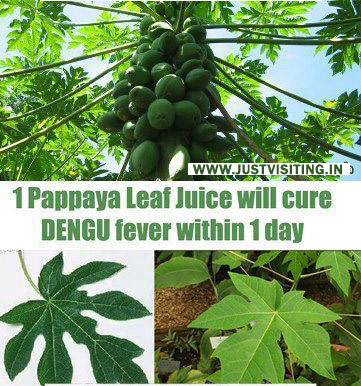
  3. However, the most common home remedy is to drink the bitter extract from a papaya leaf. Two leaves without the stalk can yield approximately two tablespoons of the extract. 
PAPPAYA LEAF TO CURE DENGU 


 It's believed one's body would be overheated when one is down with dengue and that also caused the patient to have fever papaya juice has cooling effect. Thus, it helps to reduce the level of heat in one's body, thus the fever will go away. I found that it's also good when one is having sore throat or suffering from heat.

DENGU DIAGNOSIS:

Clinical tests
  1. CVC
  2. NS1 Antigen & differential detection of IgM & IgG Antibodies.

Sunday, 1 April 2012

Do you know,Big Firms mislabel food products on trans-fat?

An easy snacks

First: What is Trans-fat and what is its effect on our body?
Trans-fat-
Trans fat is the common name for unsaturated fat with trans-isomer (E-isomer) fatty acid(s). Because the term refers to the configuration of a double carbon-carbon bond, trans fats are sometimes monounsaturated or polyunsaturated, but never saturated. Trans fats are rare in living nature, but can occur in food production processes.

Effects-
Trans-fats clog arteries when they get deposited on the walls of the arteries making the passage narrower, while large amounts of salt leads to increase in blood pressure making the heart work overtime.

What is the standard norm?
The National Institute of Nutrition (NIN) and the World Health Organization  (WHO) prescribe benchmarks of how much salt, sugar, carbohydrates and fats every individual can have on a daily basis to stay healthy.The NIN benchmark for maximum salt for one person is 6 gram, while the WHO puts it at 5 gram. The WHO says that in a balanced diet, a maximum of 1 per cent of total energy should come from trans fats. Therefore, an adult male can have 2.6 gram of trans fats per day, while an adult female can have 2.1 gram and a child (10-12 years) can have 2.3 gram.

What is the reality?
Delhi-based NGO, Centre for Science and Environment, has alleged that leading food manufacturers are guilty of "large scale misbranding and misinformation" by showing that their food contained zero trans-fats even though tests showed that they have heavy doses of it.
CSE found that Top Ramen Super Noodles (Masala) which claims to have no trans-fats actually contains 0.7 gram of it per 100 gram. No trans fats, Haldiram's Aloo Bhujia has found 2.5 gram per 100 gram. PepsiCo's Lays (Snack Smart) was sold through advertisements that these chips are healthy because they have zero trans fats, but every 100 grams of it has 3.7 grams of trans fats.If a child takes one MacDonald's Happy Meals that filles up 90% of all his daily requirement of trans fats. The packet of Happy Meal makes absolutely no mention of this massive dosage of trans fats. As per FSSAI rules, a product can claim to be trans fats free if it contains less than 0.2 gm of trans fats per serving but CSE found several brands flouting the norm and yet calling themselves trans fat free.

As per CSE report
Maggi Noodles |Single pack contains 3.5g of salt; daily recommended intake is 6g. Negligible fibres ; 70% just carbohydrates
Top Ramen Super Noodles (Masala) |0.7g trans fats/100g though company claims zero trans fats
PepsiCo's Lays (Snack Smart) |3.7g trans fats/ 100g. Earlier sold as zero trans fats chips but claim knocked off later
KFC's Chicken Zinger |16.9% fats; McAloo | 8.3% fats. 35% calories in veg burger come from fats; 47% in non-veg


Source from "Times of India

Friday, 17 February 2012

Notice to consumers who used to and food adulterating/ contaminating practicener


The presence of any foreign substance, which does not occur naturally in food products, can be injurious to health, chemical additives like oxytocin, formalin, urea and detergents can especially cause considerable damage to human body over a period of time and lead to cancer, skin diseases and other debilitating disorders. 
For instance, for vegetables coated with wax or paraffin, the FDA advises dipping them in lukewarm water for 10 minutes. Wax, if present, will rise to the surface. Similarly, scratching the surface of vegetables can detect the presence of artificial colour, while an insect, failing to sit on the surface of vegetables for prolonged periods indicates the exposure of vegetables to pesticides. In the case of fruits, milk, milk products and other daily consumables, the FDA has issued similar advisories, and has also requested people to report any adulteration of food or medicines to officials from the department.
The Moral of and food adulterating/contaminating practicener
They won’t able to think about their own family & children are facing the same cause from which they selling to others. You won’t bring back your family and others health. Won’t play with the others health, all is not money.

Prevention of Food Adulteration Act, 1954

INTRODUCTION
       Food is one of the basic necessities for sustenance of life. Pure, fresh and healthy diet is most essential for the health of the people. It is no wonder to say that community health is national wealth.
       Adulteration of food-stuffs was so rampant, widespread and persistent that nothing short of a somewhat drastic remedy in the form of a comprehensive legislation became the need of the hour. To check this kind of anti-social evil a concerted and determined onslaught was launched by the Government by introduction of the Prevention of Food Adulteration Bill in the Parliament to herald an era of much needed hope and relief for the consumers at large.

Govt. Institutions for sample testing

Food Research & Standardisation Laboratory,  Ghaziabad
Food Research and Standardisation Laboratory, Ghaziabad was established in 1971 under Directorate General of Health Services / Ministry of Health and Family Welfare, to check the adulteration and to undertake analysis of food samples from market for the purpose of determining their quality and purity.

Central Food Laboratory,  Kolkata
Central Food Laboratory, Kolkata was established in 1955 under Directorate General of Health Services, Nirman Bhavan, New Delhi, vide letter no. PFA/Sec 4/F.11-4/55-D) (I) dated. 1st June, 1995 spare of ministry of Health & Family Welfare, New Delhi to undertake analysis of food samples from trying courts from all over the country and from market to determine the quality and purity of the food to lay down standards for food Articles.The office building is situated at 3, KYD Street, Kolkata-700016.

The punishments under the law
The provisions of sub-section (1A) if any person—whether by himself or by any other person on his behalf, imports into India or manufactures for sales or stores, sells or distributes any article of food—
 Which is adulterated within the meaning of sub-clause (the quality or purity of the article falls below the prescribed standard) or misbranded within the meaning that section or the sale of which is prohibited under any provision of this Act or any rule made there under or by an order of the Food (Health) Authority?
  He should be punished by a sentence of imprisonment for a term which may extend to three months and with fine which may extend to five hundred rupees.
  The higher punishment under this law shall be the imprisonment for a term which shall not be less than three years but which may extend to term of life and with fine which shall not be less than five thousand rupees.

To know more Visit:CLICK HERE

     The Food Safety and Standards Act (FSSA), passed by Parliament in 2006, replaced the erstwhile Prevention of Food Adulteration Act (PFAA) with effect from August 5, 2011. This means that all traders should obtain the new licence by August 4, 2012 failing which they will attract a six-month imprisonment along with a hefty penalty.