Tuesday, 26 February 2013

Do you know,how your phone deactivate by your mobile service provider?


TRAI VS MOBILE SERVICE PROVIDER


Telecom Service Providers (TSPs) currently prescribe a condition of deactivation if the mobile connections remain inactive for some period of time. 
On 21st February, 2013:Telecom Regulatory Authority of India(TRAI) has released a Regulation on ‘Deactivation of Cellular Mobile Telephone Connections due to Non-usage’.At present, there is lack of transparency in carrying out such disconnections. Consumers are also not adequately informed regarding the terms and conditions of such disconnections. In the event of deactivation,the balance amount in the account of the consumer gets forfeited. In such conditions, deactivation has been causing inconvenience to consumers.


The following regulatory guidelines for deactivating mobile no:-
  1.  The mobile connections of prepaid consumers shall not be deactivated  for any period of non-usage less than 90 days;
  2.  For the purpose of usage, a voice call/ video call (incoming or outgoing) or an outgoing SMS or a data usage or usage of Value Added Services, or payment of rental (in case of post paid connection) etc. shall definitely fall in the scope of activity, the service provider may prescribe any other activity as well;
  3. There shall be no deactivation if the balance in prepaid consumer account is Rs.20/- or more;
  4. An ‘Automatic Number Retention Scheme’ shall be implemented for prepaid consumers on payment of reasonable charges;
  5.  A consumer whose connection is deactivated shall be given a grace period of 15 days within which he can reactivate the same number;
  6.  Consumers shall be transparently communicated the terms and conditions of deactivation of SIMs due to non-usage.
Ref:  TRAI released a Regulation on ‘Deactivation of Cellular Mobile Telephone Connections due to Non-usage’.

to know more about TRAI Guideline visit: "http://www.trai.gov.in" 


Sunday, 4 November 2012

Dengue Fever: symptoms, precautions and treatment


Dengue:

Dengue is an infectious tropical disease caused by the dengue virus and transmitted by the bite of an Aedes mosquito.The virus has four different types; infection with one type usually gives lifelong immunity to that type, but only short-term immunity to the others. Subsequent infection with a different type increases the risk of severe complications. As there is no commercially available vaccine.

Symptoms:

  • UNABATED FEVER is the most prominent symptom (up to 105oF). 
  • Fever may also be accompanied with SHIVERING / BODY ACHE / ACHE IN THE EYES. 
  • Severe joint and muscular pain
  • Nausea and vomiting
  • Retro-orbital (behind the eye) pain
  • Appearance of RASHES ON THE BODY is a definitive symptom. The rash may appear over most of the body 3 to 4 days after the fever begins, and then subsides after 1 to 2 days. You may get a second rash a few days later.
However it must be noted that these symptoms MAY OR MAYNOT MANIFEST TILL VERY LATE. The MOST RELIABLE symptom is A FALL IN THE PLATELET COUNT.

CAUSE & EFFECT OF THE DISEASE:

The fever is caused by a mosquito bite. The Mosquito acts as a carrier of the Dengue Virus.The virus's main affect is on the PLATELET production. Normally the platelets in our body lasts for about 4 days and the body replenishes them when required. This virus DESTROYS THE BODY's CAPACITY TO PRODUCE NEW PLATELET's (during the period it is effective). The PLATELET count for a normal person varies from 1.5 Lakh - 2.5 Lakh per unit volume. On getting infected the patients PLATELET COUNT STARTS FALLING. A PLATELET count BELOW 1.O Lakh /volume is ALARMING - immediate medical attention is required. A PLATELET count BELOW 50K is FATAL.

Note : A fall in platelet count PREVENTS FORMATION OF CLOTS - and this leads to HAEMORRAGE - which results into both INTERNAL & EXTERNAL BLEEDING - once bleeding starts the situation is almost IRRECOVERABLE.

Treatment:

Because dengue is caused by a virus, there is no specific treatment for it; treatment of dengue is typically concerned only with the relief of symptoms. People who show the symptoms mentioned above should immediately consult a physician. It is important to drink plenty of fluids, stay hydrated, and get as much rest as possible.


Dengue hemorrhagic fever (DHF)
DHF is a more severe form of dengue and can be fatal if untreated. It tends to affect children under the age of ten, and causes abdominal pain, hemorrhage (bleeding), and circulatory collapse (shock).

Do's and Don'ts

  • Seek doctor's advice in time
  • Sponge your body with tepid water several times a day to lower the temperature
  • Drinking a lot of fluids will help loosen mucus and to prevent dehydration. Drink water little by little for optimum benefit. Additionally, take clear soups, fruits juices or warm water often
  • Take anti-pyretic drug like paracetamol until temperature returns to normal
  • Do not take Antibiotics unless prescribed by a registered physician
  • Do not take aspirin in dengue as it may cause more harm than benefit

Prevention:

There is no vaccine to prevent dengue. Prevention of dengue requires eradication of the mosquitoes that carry this virus. This means high standards of hygiene and sanitation. Avoid areas littered with garbage. All containers of stationary water (like drums or buckets) should be covered or discarded, including flower vases and pets' feeding bowls. If your area is infested with mosquitoes, wear long sleeves, use mosquito repellents and fumigate if necessary.

General Prevent ions:

* Remove all sources of stagnant water

* Deny the Aedes mosquito a chance to breed

Common breeding grounds

* Flower vases and pot plates

* Pails, water-storage jars, basins

* Discarded receptacles

* Choked roof gutters

* Gully traps

* Unused toilet bowls and cisterns

* AC tray and dish rack tray

* Concrete drains

* Hardened soil of potted plants

* Tree holes

Five easy ways to prevent breeding

* Change water in vases/bowls every other day

* Add sand granular insecticide

* Remove water from flower pot plates every other day

* Clear blockages and put insecticide in roof gutters at least once a month

How to prevent mosquitoes bites

* Wear shoes, socks, long pants and long-sleeved

shirt

* Use mosquito repellents

* Mosquito coils

* Mosquito nets

Do you know...

  • Only the female mosquito feeds on blood. This is because they need the protein found in blood to produce eggs. Male mosquitoes feed only on plant nectar.
  • The mosquito is attracted to us by body odour, carbon dioxide and body heat.
  • The female Aedes mosquito is a day-biter, most active in dawn and dusk.

HOME REMEDIES:

Dengue goes fatal when PLATELET count goes BELOW 50K. This is a very serious situation. And without taking any more risk, doctor is starts blood transfusion.

There is some ways that will help prevent platelet count from dropping:
  1. Take a lot of vitamin C supplements. You can obtain vitamin C from fruits and vegetables. Because vitamin C is water soluble, it can be easily absorbed by the body and will immediately help in restoring the body’s platelet count.
  2. Herbal medications are also helpful in restoring platelet count. Pound the herb with pestle and mortar to extract the juice. Although the juice is very bitter and requires a lot of effort downing them, it is worth it. Most people even add sugar to the juice to make it more palatable and easy to drink.
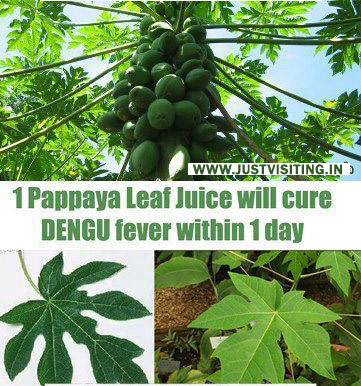
  3. However, the most common home remedy is to drink the bitter extract from a papaya leaf. Two leaves without the stalk can yield approximately two tablespoons of the extract. 
PAPPAYA LEAF TO CURE DENGU 


 It's believed one's body would be overheated when one is down with dengue and that also caused the patient to have fever papaya juice has cooling effect. Thus, it helps to reduce the level of heat in one's body, thus the fever will go away. I found that it's also good when one is having sore throat or suffering from heat.

DENGU DIAGNOSIS:

Clinical tests
  1. CVC
  2. NS1 Antigen & differential detection of IgM & IgG Antibodies.

Sunday, 1 April 2012

Do you know,Big Firms mislabel food products on trans-fat?

An easy snacks

First: What is Trans-fat and what is its effect on our body?
Trans-fat-
Trans fat is the common name for unsaturated fat with trans-isomer (E-isomer) fatty acid(s). Because the term refers to the configuration of a double carbon-carbon bond, trans fats are sometimes monounsaturated or polyunsaturated, but never saturated. Trans fats are rare in living nature, but can occur in food production processes.

Effects-
Trans-fats clog arteries when they get deposited on the walls of the arteries making the passage narrower, while large amounts of salt leads to increase in blood pressure making the heart work overtime.

What is the standard norm?
The National Institute of Nutrition (NIN) and the World Health Organization  (WHO) prescribe benchmarks of how much salt, sugar, carbohydrates and fats every individual can have on a daily basis to stay healthy.The NIN benchmark for maximum salt for one person is 6 gram, while the WHO puts it at 5 gram. The WHO says that in a balanced diet, a maximum of 1 per cent of total energy should come from trans fats. Therefore, an adult male can have 2.6 gram of trans fats per day, while an adult female can have 2.1 gram and a child (10-12 years) can have 2.3 gram.

What is the reality?
Delhi-based NGO, Centre for Science and Environment, has alleged that leading food manufacturers are guilty of "large scale misbranding and misinformation" by showing that their food contained zero trans-fats even though tests showed that they have heavy doses of it.
CSE found that Top Ramen Super Noodles (Masala) which claims to have no trans-fats actually contains 0.7 gram of it per 100 gram. No trans fats, Haldiram's Aloo Bhujia has found 2.5 gram per 100 gram. PepsiCo's Lays (Snack Smart) was sold through advertisements that these chips are healthy because they have zero trans fats, but every 100 grams of it has 3.7 grams of trans fats.If a child takes one MacDonald's Happy Meals that filles up 90% of all his daily requirement of trans fats. The packet of Happy Meal makes absolutely no mention of this massive dosage of trans fats. As per FSSAI rules, a product can claim to be trans fats free if it contains less than 0.2 gm of trans fats per serving but CSE found several brands flouting the norm and yet calling themselves trans fat free.

As per CSE report
Maggi Noodles |Single pack contains 3.5g of salt; daily recommended intake is 6g. Negligible fibres ; 70% just carbohydrates
Top Ramen Super Noodles (Masala) |0.7g trans fats/100g though company claims zero trans fats
PepsiCo's Lays (Snack Smart) |3.7g trans fats/ 100g. Earlier sold as zero trans fats chips but claim knocked off later
KFC's Chicken Zinger |16.9% fats; McAloo | 8.3% fats. 35% calories in veg burger come from fats; 47% in non-veg


Source from "Times of India"